Foldable vs Tote vs Drawstring Promotional Bags: A Buyer Comparison Guide
Three bag formats cover most promotional giveaways, and they are not interchangeable. Model FDV010 is a foldable bag built to be carried flat and handed out in volume. Model 3800 is a cotton or canvas tote built to carry load and stay in circulation. Model 4211 is a drawstring bag built to present a gift and double as a light backpack. The format you pick decides what a recipient can do with the bag on day one — and that decides whether the printed logo keeps moving or stays in a drawer.
This comparison is written for buyers at the awareness and research stage: the point where a campaign is defined, a quantity is roughly known, and the bag itself has not been chosen yet. It compares the three Yulite models on structure, listed material options, size range, logo methods and campaign fit. It does not quote prices, because quoted cost depends on specifications that are confirmed at the quotation stage — material family, basis weight, size, logo method and order quantity.
Why the format decision usually gets made last — and why that is expensive
Most promotional bag projects begin with artwork. The logo is approved, the colours are locked, and only then does someone ask which bag the print goes on. That order puts the format decision at the end of the process, when the budget has been set and the delivery date is already tight.
Format changes three things at once, and only one of them is visual:
- Carrying behaviour. A tote is carried by hand or shoulder with a load inside. A drawstring bag is pulled closed and slung on the back. A foldable bag is often carried folded until the recipient needs it. These are different physical experiences, and they suit different giveaways.
- Packing and freight. A bag that folds flat occupies a different shipping profile from a tote that holds its shape. For high-volume programmes, that difference shapes how the order is packed, warehoused and distributed.
- How much material sits behind the logo. Logo application does not perform the same on every structure. The method has to be chosen against the fabric and the surface, not against a preference for one technique.
The practical rule is simple: choose the format from the hand-out moment, then choose the material, then choose the logo method. Reversing that order is the most common reason a promotional bag programme ends up with leftover stock or a bag that is never used a second time.
Where promotional bags sit in the branded merchandise market
Branded merchandise is a large, measured category rather than a niche giveaway line. Global spending on branded merchandise reached USD 338.3 billion in 2025, according to the PPAI / Oxford Economics study Branded Merchandise Supports a $472 Billion Global Economic Footprint. That figure covers the full chain from manufacturing to distribution, and reusable bags sit inside it as a recurring staple because they keep advertising after the event closes.
The lifetime advertising value is the reason buyers keep returning to bags. The same PPAI / Oxford Economics research, cited in 2025 branded-merchandise reporting, puts a reusable cotton tote at more than 3,500 impressions over its lifetime. A bag that is used for a year produces exposure that a printed flyer cannot match, and that is the commercial argument behind choosing a structure people will actually reuse.
Material expectations have shifted alongside that value. According to the ASI 2024 Counselor State of the Industry report, sustainable products accounted for 13.77% of total US promotional industry sales — USD 3.69 billion — a 20% increase over the previous year. For bag buyers this has two consequences. Material family becomes a programme requirement rather than a cost variable, and the material has to survive the use phase, not just the hand-out.
For context on the wider category, the global bag market was valued at USD 185.2 billion in 2024 and is forecast to reach USD 289.78 billion by 2033, per SkyQuest Technology's Bag Market Size, Share | Forecast Report [2033]. Promotional bags are a small slice of that total, but they behave like the rest of the bag market in one respect: format follows use.
What the market data does not tell you. None of these figures indicate which format suits a specific campaign. Format selection is a specification decision made against distribution method, audience and reuse expectation — not against a category growth chart.
The three formats, model by model
Model FDV010 — the foldable promotional bag
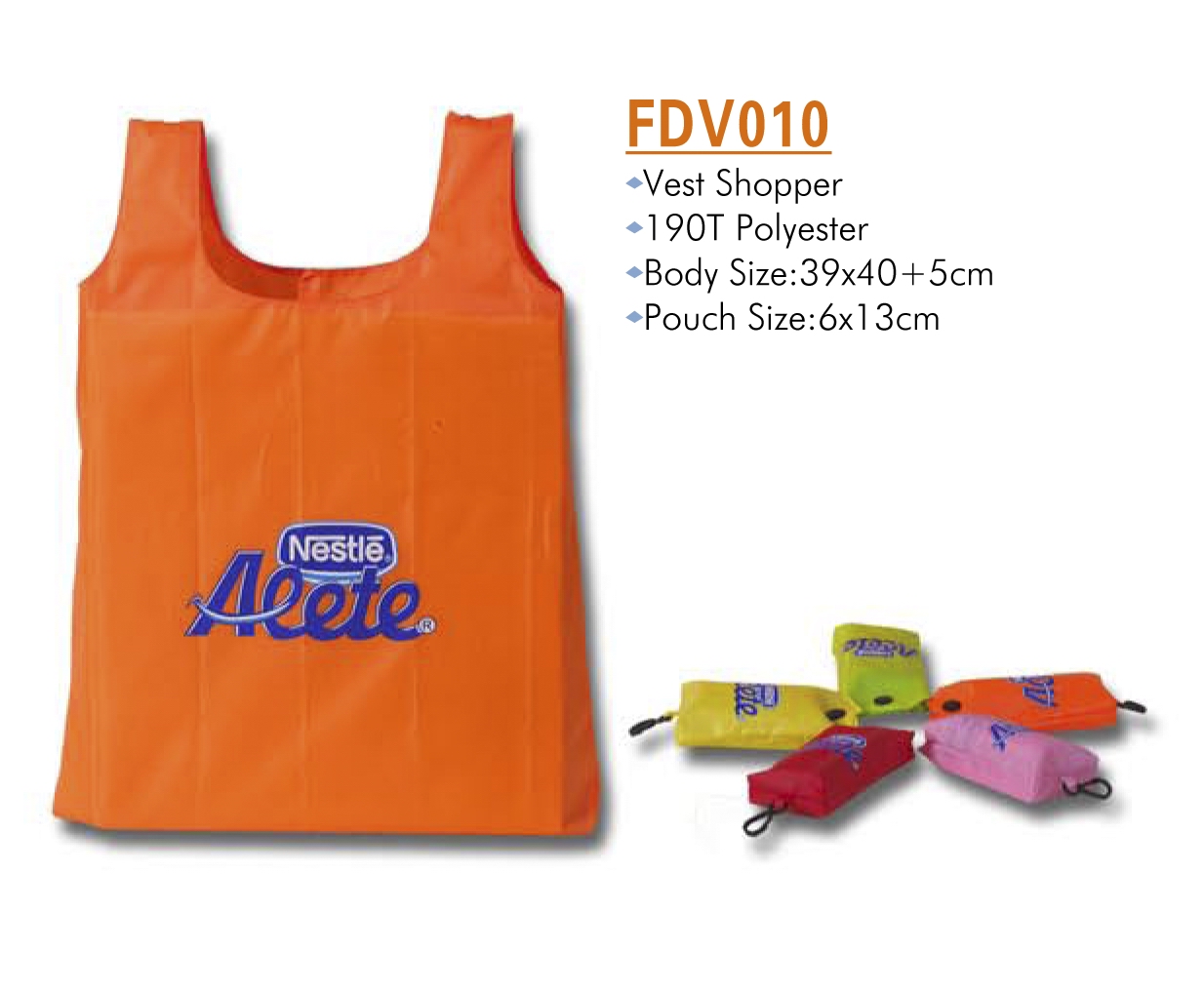
Model FDV010 is a foldable bag, also listed as a promotional foldable bag, folded bag, folding bag and collapsible bag. It is intended for all industries for promotion and designed for promotional scenarios. It is available in small, medium and large sizes, in natural colour or any dyed colour.
The defining feature for buyers is material breadth. FDV010 can be made of 100% cotton, recycled cotton, organic cotton, polyester, nylon or non-woven fabric. That range means one structure can serve several different programme requirements — a natural-fibre look for a retail brand, a synthetic construction for a high-volume street giveaway, or a non-woven build for a cost-controlled distribution. The logo can be applied by silk printing, transfer printing, digital printing or embroidery.
Where it fits. Foldable bags are the format of choice when the bag has to travel to the recipient rather than the recipient travelling to the bag: mailers, conference seat drops, hotel welcome packs, and large-scale public giveaways where the bag is carried away folded and opened later.
Where it does not fit. A folding structure is a trade-off between packability and rigidity. Buyers whose campaign depends on the bag being loaded heavily at the point of hand-out, such as a supermarket or department store checkout, should evaluate a tote instead.
Model 3800 — the cotton or canvas tote bag
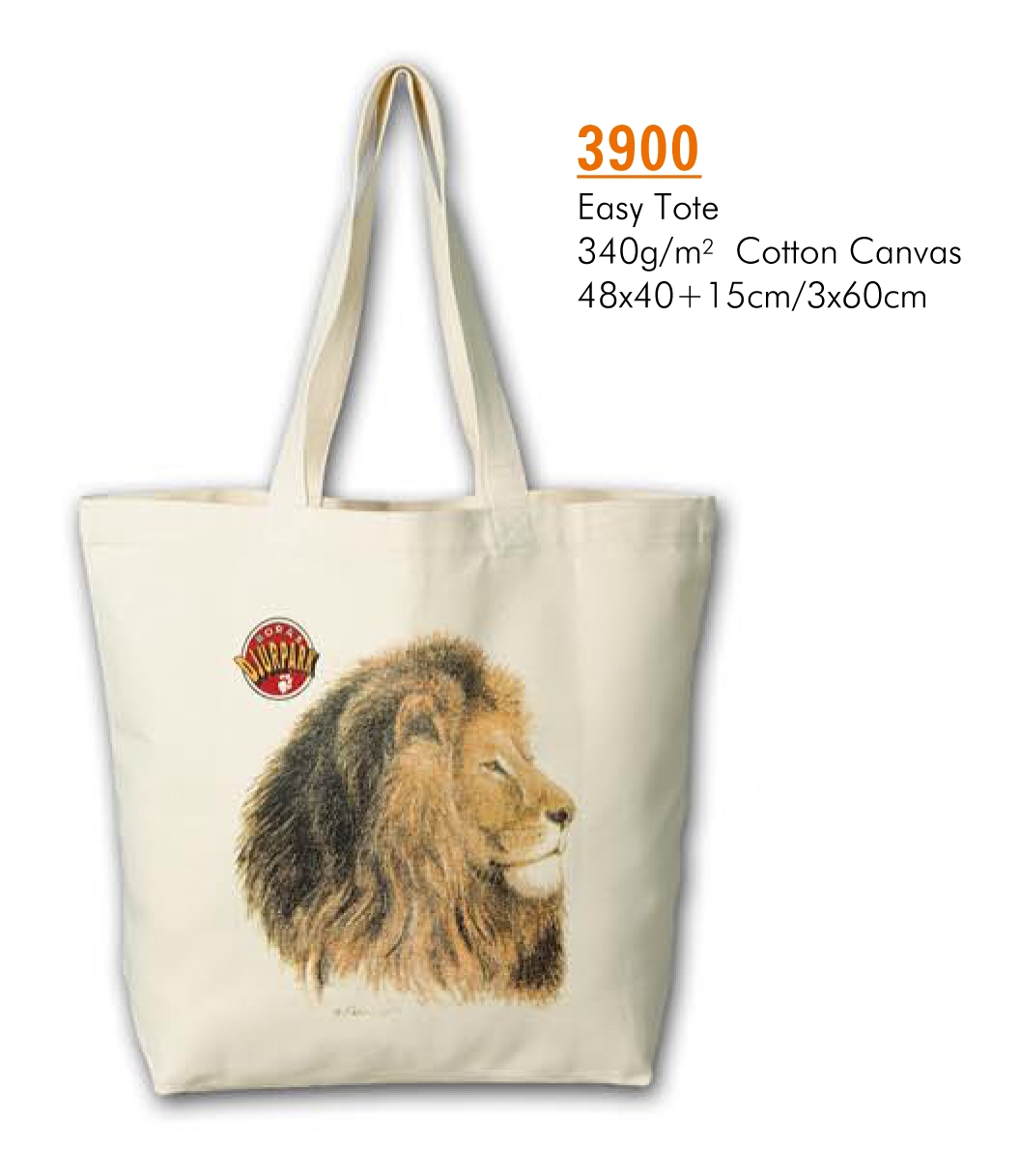
Model 3800 is a tote bag in the cotton tote bag category, also classified as a canvas tote bag. It is offered as an oversized tote, a big capacity tote and an easy carry tote, and it supports customization as a customized tote bag. Sizes are small, medium and large, in natural or any dyed colour, and the logo can be applied by silk printing, transfer printing, digital printing or embroidery.
The material list for this model is deliberately narrow: 100% cotton, recycled cotton and organic cotton. That is a specification statement, not a limitation to work around. Buyers who need a cotton or canvas tote for a programme with a natural-fibre or recycled-content requirement will find the three cotton options cover the usual positions. Buyers who need polyester, nylon or non-woven for the same campaign should select a different structure from the same range rather than force this one.
Where it fits. Model 3800 is used in the advertising premiums industry and is suitable for promotional customization projects. Its role in those projects is to package promotional gifts and retail merchandise, and it also appears in the cultural travel and hotel industry. The pattern is consistent: the tote is the format that carries something else — a purchase, a gift set, a welcome kit — and keeps carrying it afterwards.
Where it does not fit. A tote holds its shape and its volume. For campaigns where the bag must be compressed into an envelope or packed into a gift box with other items, a foldable format distributes more efficiently.
Model 4211 — the promotional drawstring bag
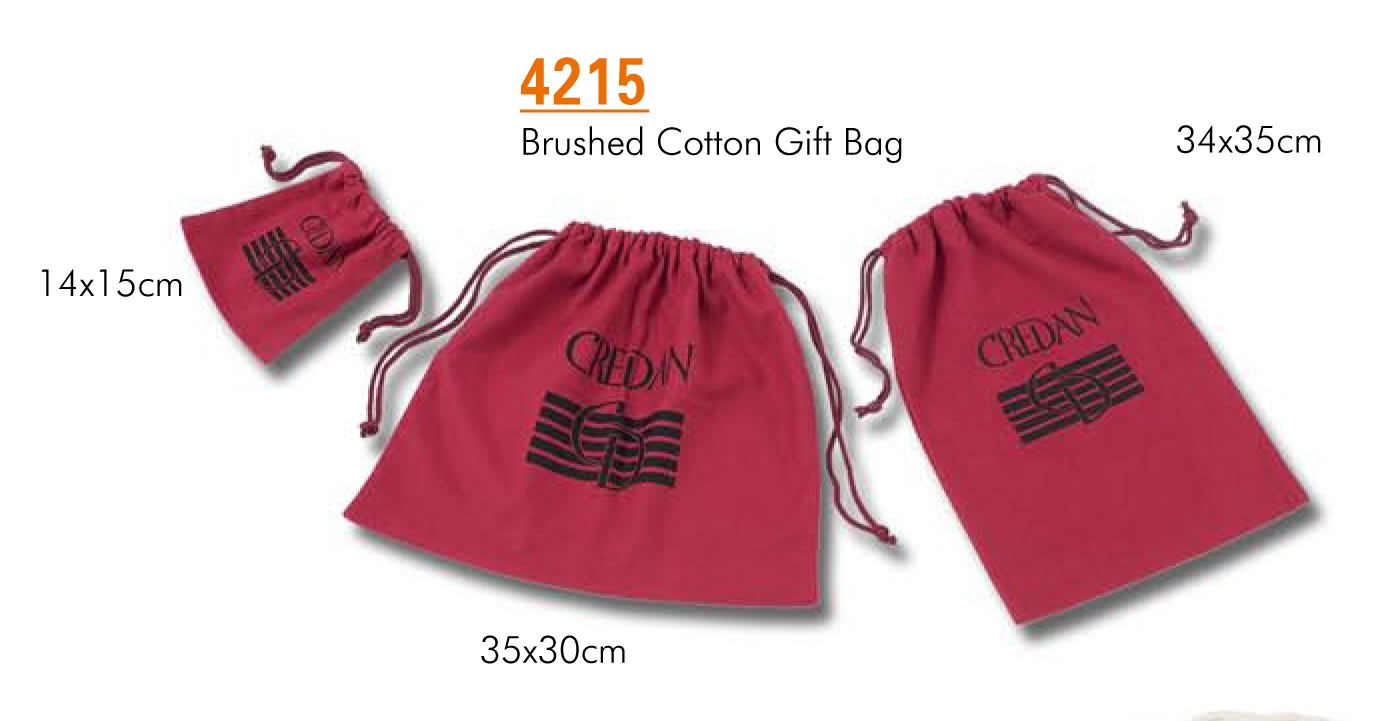
Model 4211 is a drawstring bag in the drawstring gift bag category, classified as a promotional drawstring bag. Type variations are listed as drawstring gift pouch and drawstring backpack bag. It is intended for all industries for promotion, and it appears in the conferences, exhibitions and events industry, applied in trade show and event projects.
This is the most specified of the three models in the current range. Material options are 100% cotton, recycled cotton, organic cotton, polyester, non-woven fabric and nylon. Fabric weight ranges from 100 gsm to 280 gsm, which gives a buyer a real lever between a light event giveaway and a heavier pouch that holds shape in a gift context. Sizes are small, medium and large, in natural or any dyed colour, and logo methods are silk printing, transfer printing, digital printing and embroidery.
Where it fits. The drawstring format works when the bag is part of a gift rather than the gift itself: a pouch that presents contents, closes securely and can then be carried on the back. Its listed operating condition is daily handheld and shoulder use, and its stated special requirements are custom logo printing and eco-friendly material options.
Where it does not fit. A drawstring closure supports light, soft contents. Where the campaign requires flat-bottom loading or a bag that stands upright on a counter, the tote remains the better structure.
A six-step selection process
The sequence below is ordered so that each decision constrains the next one. Skipping a step usually means redoing the artwork or re-quoting the order.
Step 1 — Define the hand-out moment
Write down where the bag changes hands and what the recipient is doing at that moment. Standing at a trade show booth, walking out of a store with a purchase, opening a mailed parcel, checking into a hotel: each of these implies a different structure. Do this before looking at bag catalogues, because a catalogue will make every format look equally suitable.
Step 2 — Pick the structure from that moment
Load-carrying at hand-out points to a tote. Gift presentation with a light payload points to a drawstring. Distribution at distance points to a foldable. If two structures both seem plausible, compare them on packing profile next — that is usually where they separate.
Step 3 — Set the material family and basis weight
Model 3800 is a cotton-family bag: 100% cotton, recycled cotton or organic cotton. Model FDV010 and Model 4211 both span cotton, recycled cotton, organic cotton, polyester, nylon and non-woven. For Model 4211 you can also specify fabric weight from 100 gsm to 280 gsm. Basis weight is the variable that most directly changes how a bag feels in the hand, so treat it as a specification decision rather than an afterthought. Buyers comparing a lighter and a heavier build should ask for both in the sample stage.
Step 4 — Fix the size
All three models are available in small, medium and large. Size should follow the intended contents, not the print area: a bag specified around logo size often ends up the wrong shape for what the recipient actually puts inside it. For the tote, oversized and big-capacity versions are listed options, which matters when the bag is meant to replace a retail carrier.
Step 5 — Choose the logo method against the surface
Silk printing, transfer printing, digital printing and embroidery are listed for all three models. The methods are not interchangeable on a per-unit basis. Flat cotton surfaces and textured non-woven surfaces do not take the same technique with the same result. Decide the method with the supplier against the confirmed material, and confirm it on a physical sample rather than on a screen.
Step 6 — Validate with a physical sample
Sign off on a physical sample before production. The sample is where material hand-feel, size proportion, logo placement and colour accuracy are actually confirmed. Yulite operates an independent sampling room with professional sample workers and states that samples can be delivered within 3 days.
Matching format to campaign scenario
The scenario table below is the shortest path from campaign type to format. It reflects the application contexts recorded for these models, not general assumptions about giveaways.
- Trade shows and exhibitions. Model 4211 is recorded in the conferences, exhibitions and events industry for trade show and event projects, and Model FDV010 suits volume hand-outs where attendees carry the bag folded until they need it.
- Department store retail and advertising premiums. Model 3800 is recorded in the advertising premiums industry, where its role is to package promotional gifts and retail merchandise. A bag that carries the purchase out of the store is also the bag that carries the brand home.
- Cultural travel and hotel programmes. Model 3800 also appears in the cultural travel and hotel industry — a context where the bag is expected to hold a welcome pack and survive several days of use.
- Beauty and garment gift-with-purchase. The drawstring format presents contents and closes without hardware, which suits pouch-style gifting. Where a zipped pouch is required instead, that is a different category in the range.
- Mailers, subscription boxes and parcel inserts. Foldable bag FDV010 packs flat, so it fits a distribution model where the bag travels before it is used.
- Internal onboarding and welcome kits. Model 3800 carries a document folder and accessories without distortion; Model 4211 is the lower-volume option for a kit that includes soft items only.
Side-by-side comparison
Every entry below comes from the published model data for FDV010, 3800 and 4211. Where a field is not stated for a model, the table says so rather than filling the gap.
| Attribute | Model FDV010 (foldable) | Model 3800 (tote) | Model 4211 (drawstring) |
|---|---|---|---|
| Product category | Foldable bag | Cotton tote bag / canvas tote bag | Drawstring gift bag / promotional drawstring bag |
| Listed aliases and variations | Promotional foldable bag, folded bag, folding bag, collapsible bag | Oversized tote, big capacity tote, easy carry tote, customized tote | Drawstring gift pouch, drawstring backpack bag |
| Material options | 100% cotton, recycled cotton, organic cotton, polyester, nylon, non-woven | 100% cotton, recycled cotton, organic cotton | 100% cotton, recycled cotton, organic cotton, polyester, non-woven, nylon |
| Fabric weight | Not stated in the model data | Not stated in the model data | 100 gsm to 280 gsm |
| Sizes | Small, medium, large | Small, medium, large | Small, medium, large |
| Colour | Natural or any dyed colour | Natural or any dyed colour | Natural or any dyed colour |
| Logo methods | Silk printing, transfer printing, digital printing, embroidery | Silk printing, transfer printing, digital printing, embroidery | Silk printing, transfer printing, digital printing, embroidery |
| Intended use | All industries for promotion | All industries for promotion; advertising premiums; promotional customization | All industries for promotion; conferences, exhibitions and events |
| Strongest campaign fit | Mailers, seat drops, volume giveaways | Retail, hotel and travel, gift-with-purchase packaging | Trade show gifts, pouches, light backpack use |
| Main structural trade-off | Packability over rigidity at hand-out | Volume and shape over packing density | Light, soft contents only |
Customization and supply checks before you commit
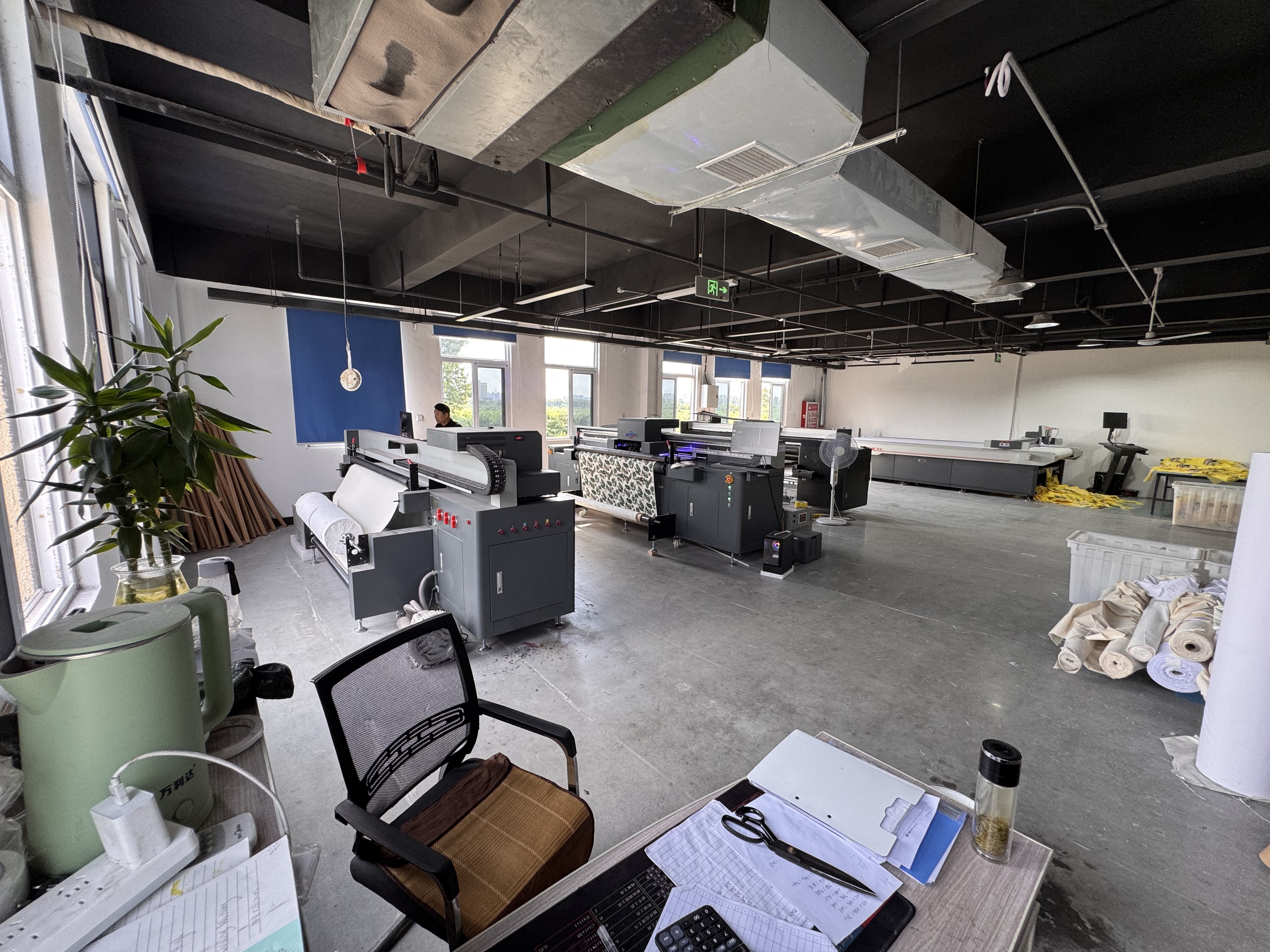
Format and specification are only half of the order. The other half is whether the supplier can reproduce the specification at volume and on schedule. Henan Yulitepromotion Co., Ltd. was established in 2008, operates a 15,000 m² manufacturing facility, employs approximately 200 staff and reaches an annual production capacity of 20,000,000 pieces. The workshop maintains a stable daily output of 30,000 to 50,000 pieces.
The company specialises in manufacturing promotional bags and other sustainable environmental products, with a range that includes cotton and canvas bags, tote bags, drawstring bags, foldable bags, cosmetic pouches, backpacks, cooler bags, polyester and nylon bags, RPET and recycled cotton bags, RPET felt bags and non-woven bags. Export business accounts for 100% of total sales, and products are exported to over 86 countries and regions, with major markets including the EU, the USA, Japan and Australia.
On quality systems, the company states that it has passed BSCI and SEDEX audits and holds ISO 9001, OEKO-TEX Standard 100 and GRS certifications. Logo application capabilities stated by the factory include heat transfer printing, screen printing, digital printing and embroidery. Production equipment includes high-post sewing machines, computer sewing machines, pattern sewing machines, button attaching machines, overlock machines, square cutting machines, hot cutting machines and shoulder strap cutting machines. The R&D team consists of less than 10 engineers.
How to use this in a buyer checklist. Treat certification and audit statements as factory-level credentials and confirm the product-level test documentation required for your destination market separately. Ask for the sample before approving artwork, and confirm which logo method is being quoted — the four methods listed for these models are not priced or scheduled identically.
Frequently asked questions
What certifications and audits should a buyer verify before ordering promotional bags?
Henan Yulitepromotion Co., Ltd. states that it has passed BSCI and SEDEX audits and holds ISO 9001, OEKO-TEX Standard 100 and GRS certifications. These are company-level credentials, so they answer the question of whether the factory operates a recognised management and materials system. They do not automatically certify a specific bag. Buyers with a destination-market requirement should ask for the product-level documentation that applies to the exact model, material and printing method being ordered, and should keep that documentation with the purchase order.
Can all three formats carry a custom logo, and which methods are listed?
Yes. Model FDV010, Model 3800 and Model 4211 are each listed with four logo methods: silk printing, transfer printing, digital printing and embroidery. The formats differ in material, not in logo capability. Model 3800 is limited to the cotton family — 100% cotton, recycled cotton and organic cotton. Model FDV010 and Model 4211 both add polyester, nylon and non-woven. Because the print surface changes with the material, the method should be confirmed against the actual fabric rather than selected from the list alone.
What specification variables drive the quotation for FDV010, 3800 and 4211?
No published price applies across these models, because the quotation follows the specification. The variables that change it are the material family, the basis weight where one is specified — Model 4211 states a range of 100 gsm to 280 gsm — the size (small, medium or large), the logo method and number of print colours, the packaging requirement, and the order quantity. Two orders for the same model can therefore differ substantially. The efficient approach is to fix the format first, then request a quotation against a single confirmed specification per model rather than a range.
How quickly can a sample be produced?
Yulite operates an independent sampling room with professional sample workers and states that samples can be delivered within 3 days. The sample stage is where material hand-feel, size proportion, logo placement and colour are confirmed against the approved artwork. Because logo method interacts with material, a single sample covering the intended material and the intended print method gives a more reliable sign-off than a sample produced in a different combination.
How does production capacity affect delivery planning for a large promotional bag order?
Capacity determines how a large order is scheduled rather than whether it can be made. Yulite reaches an annual production capacity of 20,000,000 pieces and maintains a stable daily output of 30,000 to 50,000 pieces across a 15,000 m² facility with approximately 200 staff. For a programme with a fixed launch date, share the quantity and the in-hand date at the enquiry stage so the schedule can be built around confirmed capacity, and use the sample approval as the point at which the production slot is locked. To discuss a specific specification, contact hukaiying@yulitepromotion.cn or send an enquiry through www.yulitepromotion.cn.
Conclusion: choose the hand-out moment, not the logo
The comparison resolves into three clean positions. Model 4211 is the most specified of the three, with fabric weight from 100 gsm to 280 gsm and the widest material list, and it is the natural choice for trade show gifting and pouch-style presentation. Model 3800 is the load-carrying format, restricted to the cotton family and built for retail, hotel and travel contexts where the bag carries something out of the building. Model FDV010 is the distribution format, spanning the full material list and suited to anything that has to travel flat before it is used.
Two rules hold across all three. Material family and basis weight decide how the bag feels and how the logo performs, so they should be specified rather than assumed. And the sample is the only reliable point of approval — the specification sheet gets you to the sample, not past it.
Next step: match a format to your campaign
Send the hand-out scenario, the target quantity and the intended material, and Yulite will confirm which of FDV010, 3800 or 4211 fits — plus the logo method that suits the chosen surface. Samples can be arranged before artwork is finalised.
Email: hukaiying@yulitepromotion.cn | Tel: 0086-371-63944082 | WhatsApp: 0086-13703865302
Address: 9F.KINEER CENTRE, NO.51 NONGYE ROAD SOUTH, ZHENGZHOU, 450008, CHINA
Download the full 2026 product catalogue: 2026 Yulite Spring Catalogue (PDF)
Have Questions or Need More Details?
Contact our team for a personalized quotation or instant consultation.
Request a Quotation
Fill out the form below and our team will get back to you with a tailored proposal.
WhatsApp Direct Chat
Prefer to chat in real-time? Message us on WhatsApp for instant assistance & quick answers.
- Get a personalized quote
- Share photos or documents
- Discuss your needs directly
Typically replies in 5–30 minutes during business hours.