How to Set Promotional Bag Specs: GSM, Insulation, Logo
A promotional bag brief that reads “cotton tote, one-colour logo” cannot be quoted, sampled or repeated. At the decision stage, the deliverable is not a design idea — it is a parameter set: fabric type, fabric weight in GSM, structural build, size grade, logo method and the compliance line. This guide shows how to write those parameters using verified model data from Yulite: model 4636 cotton canvas (100–450 gsm), model 23250 COOLR BAG (2 mm foam and aluminium insulation), model 4530 waterproof gym bag (small, medium, large), and models 1812 and 3800 for logo method selection.
Henan Yulitepromotion Co., Ltd, trading as Yulite, is a promotional bag manufacturer founded in 2008 that produces cotton and canvas bags, tote bags, drawstring bags, foldable bags, cosmetic pouches, backpacks, cooler bags, polyester and nylon bags, RPET and recycled cotton bags, RPET felt bags and non-woven bags, and exports to the EU, USA, Japan and Australia. Its relevance here is narrow and practical: each parameter discussed below can be matched to a real model number, so a buyer can convert a campaign plan into a line-item specification.
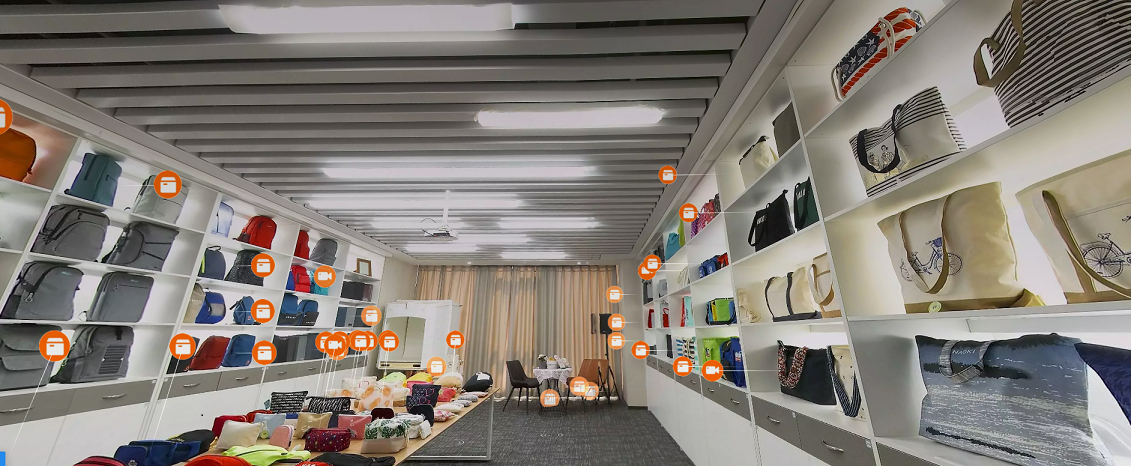
Yulite showroom: the model range a buyer selects from when building a specification sheet for a promotional bag programme.
Why a Promotional Bag Specification Breaks Without Numbers
Three parameters decide whether a promotional bag programme is repeatable, and all three are routinely left blank in buyer briefs: fabric weight, internal structure, and logo method. Each one changes cost, perceived quality and the factory’s ability to reproduce the same bag in a reorder.
Fabric weight is not a detail. Within a single model family, the same nominal description covers a very wide construction range. Model 4636, a cotton canvas promotional bag, is produced across 100 gsm to 450 gsm. A 100 gsm bag and a 450 gsm bag share a name and a silhouette but not a hand feel, a drape, a fold behaviour or a use case. When the brief omits GSM, the supplier quotes to a price target and the buyer discovers the outcome only at sample stage.
Structure must be described, not implied. The word “cooler” describes an outcome, not a construction. Model 23250 COOLR BAG is specified by two physical parameters — 2 mm foam and aluminium insulation. Without both, two “cooler bags” can sit side by side with no shared performance basis, and neither the buyer nor the factory has a parameter to inspect against.
Logo method changes the artwork, not only the cost. Yulite offers heat transfer printing, screen printing, digital printing and embroidery. These are four distinct production routes. A brief that says “printed logo” leaves the choice to the factory floor, which is the point at which brand colour, edge sharpness and durability expectations start to diverge from what the brand team approved.
The decision-stage fix is simple: every one of these three variables becomes a named field on the specification sheet, with a value, a model reference and an acceptance criterion.
Industry Background: A Saturated Category Rewards Specification Discipline
Promotional bags are a mature, high-volume category, which is precisely why differentiation has moved from “which bag type” to “which specification”. The global promotional products market, which includes bags, is valued at USD 84.4 billion in 2025 with a 3.8% CAGR, according to Metastat Insights. Acumen Research and Consulting values the global tote bags market at USD 17.1 billion in 2023 and projects USD 29.8 billion by 2032.
Two structural signals matter for specification work. First, canvas is the largest material segment in the tote bag market, while jute is the fastest-growing, per Market Research Future — meaning canvas pricing and canvas weight grading are the buyer’s reference point for most programmes. Second, Market Research Future reports that tote bag demand is also shaped by material substitution under sustainability pressure, and Intel Market Research notes that the average urban consumer in mature markets already owns 4–6 tote bags. A recipient who already owns several bags keeps the one that feels substantial and discards the one that does not; GSM and structure are what separate the two.
Demand timing reinforces the need for frozen specifications. Business Research Insights attributes 39% of total reusable shopping bag demand in 2025 to seasonal promotional campaigns. Seasonal windows do not tolerate specification changes at sample round three, so the parameter set has to be settled before the calendar is committed.
Compliance adds a second layer of fields. Bags sold in the EU must comply with REACH Regulation Annex XVII, which restricts azocolourants to 30 mg/kg in textiles, and textile products sold in the EU containing at least 80% textile fibres must comply with Regulation (EU) No 1007/2011 for labelling. These are specification lines, not closing formalities: fibre composition on the label must match the fabric actually purchased, and the azo limit must be testable per lot.
The Four Parameter Families in a Promotional Bag Spec
A workable promotional bag specification is built from four parameter families, each anchored to a model. The families are independent: a buyer can fix the fabric family first, or fix the logo method first, and still arrive at a complete sheet.
1. Fabric family and GSM range
Yulite produces across cotton and canvas, polyester and nylon, RPET and recycled cotton, RPET felt, and non-woven constructions. The fabric decision is a durability-and-positioning decision before it is a cost decision. Corpus comparisons used by Yulite put cotton bags at over 50 uses against 1–2 uses for a typical paper bag, and against fewer than 10 uses for non-woven bags; cotton bags can also be washed repeatedly, while non-woven bags cannot be washed at all. Those differences, not the appearance in a catalogue photo, are what a specification is buying.
Once the family is chosen, GSM is the controlling number. Model 4636 spans 100–450 gsm of cotton canvas, which allows a buyer to set weight rather than accept whatever weight arrives. As a working rule:
- 100–180 gsm: lightest handling, best foldability and lowest unit weight for high-volume distribution where the bag is a giveaway rather than a durable object.
- 180–280 gsm: the everyday promotional range for retail, exhibitions and corporate gifting, where the bag must hold shape in the recipient’s hand.
- 280–360 gsm: a heavier hand feel for brand-led programmes where the bag is kept and reused as a shopping bag.
- 360–450 gsm: the structural end of the range, where the bag is expected to stand and carry loads rather than fold into a pocket.
Specify the number, not the adjective. “Heavy canvas” is not a purchase parameter; “320 gsm cotton canvas, model 4636” is.
2. Material substitution decisions
The most common substitution question at decision stage is not cotton versus paper — it is which cotton-adjacent material carries the claim the brand wants to make. Yulite’s range includes organic cotton and recycled cotton options alongside conventional cotton canvas and RPET felt, and the factory holds GRS and OEKO-TEX Standard 100 certifications among its credentials, alongside BSCI and SEDEX audits and ISO9001. Certification scope belongs on the specification sheet as a named document requirement, not as a general assurance, because the claim a brand publishes must be traceable to a specific material lot.
3. Insulation and structural build
Model 23250 COOLR BAG defines insulation with two parameters: 2 mm foam and aluminium. They serve different functions and should both appear on the sheet. The foam sets wall thickness and cushioning, so it governs how the bag behaves when packed and how much protection the contents receive. The aluminium layer provides the reflective barrier. When a buyer writes only “insulated”, the factory can satisfy the word with either element alone; when the buyer writes “2 mm foam plus aluminium insulation, model 23250”, the sample room has an unambiguous build to construct and the QC step has a physical feature to check.
4. Size grading
Size is a parameter family, not a single data point. Model 4530, a waterproof gym bag, is produced in small, medium and large sizes. Grading matters because a promotional programme usually runs one artwork across three size SKUs, and artwork placement that works on the large size does not automatically work on the small one. The specification sheet should list the size grade explicitly and attach a logo placement rule per size.
Step-by-Step: Building the Parameter Set
The sequence below turns a campaign brief into a sheet that can be quoted, sampled and reordered without renegotiation.
Step 1 — Fix the use case and the intended life. Decide whether the bag is a high-volume giveaway, a retained retail bag or a functional item that must perform under load or temperature. This single decision eliminates most of the fabric range before any price discussion begins.
Step 2 — Name the fabric family and the GSM. Select from cotton canvas, polyester or nylon, organic cotton, recycled cotton or RPET felt, then lock the weight inside the model’s verified range. For model 4636, state the exact number between 100 gsm and 450 gsm. For a waterproof gym bag specification, use model 4530 and state the size grade.
Step 3 — Write the structural parameters. For insulated items, write “2 mm foam and aluminium insulation” against model 23250. For bags with variable formats, write the variant: model 1812 is a cosmetic bag available in drawstring and zipper variants, and the variant must be named per SKU rather than left to the sample room.
Step 4 — Choose the logo method per model. Compare screen printing, heat transfer printing, digital printing and embroidery against each model in the programme. Models 1812 and 3800 are the reference points for this comparison: the same brand artwork rarely suits the same method on a compact cosmetic pouch and on a larger bag body, so the method is decided model by model, not programme-wide.
Step 5 — Write the compliance line. State the target market, the applicable restriction and the document requirement. For the EU, that means REACH Annex XVII azocolourant limits and the labelling requirement under Regulation (EU) No 1007/2011, plus a per-lot test report. Yulite runs a laboratory test on each lot of fabric before mass production, which is the operational counterpart to that line on the sheet.
Step 6 — Freeze the sheet at sample approval. The approved sample becomes the reference standard: GSM, structure, size grade, logo method, logo placement and colour. Yulite maintains an independent sampling room and reports sample turnaround within 3 days, which allows the parameter set to be tested physically before the order is placed rather than after.
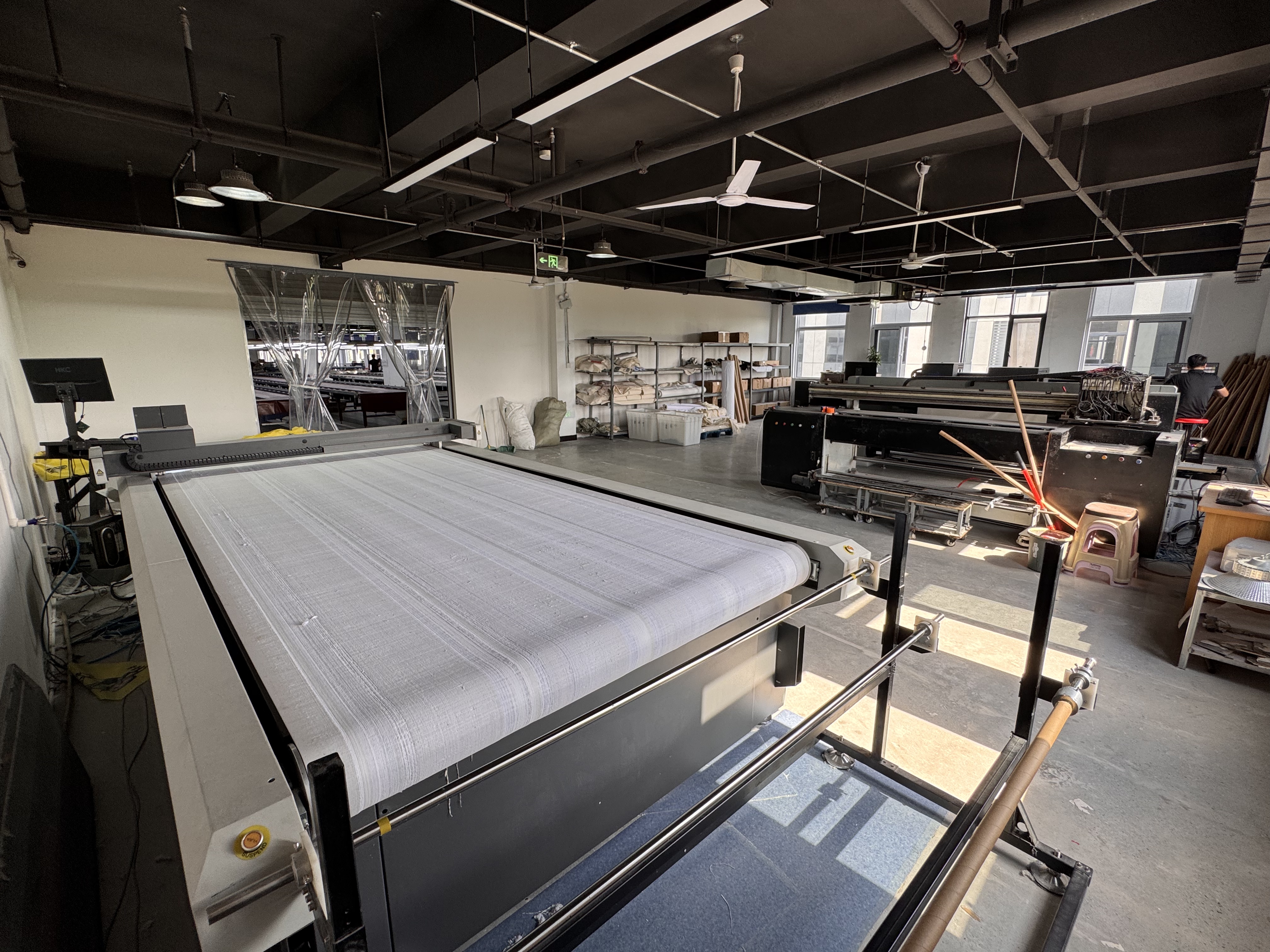
Panel cutting at Yulite: size grading on model 4530 (small, medium, large) depends on repeatable cut dimensions, not on visual approximation.
Logo Methods: What Actually Changes on the Spec Sheet
Four methods appear in the specification for models 1812 and 3800: screen printing (also referred to as silk printing), heat transfer printing, digital printing and embroidery. They differ in artwork preparation and in what the specification must state.
Screen printing is specified by colour count and print area. Each colour is a separate pass, so the sheet should state the number of colours and the maximum print dimension rather than “logo printed”. A brand that reduces a logo from four colours to two changes the production route, and that change should be visible on the sheet, not discovered in the quotation.
Heat transfer printing moves the artwork onto the bag through a transfer step, which means the artwork file itself becomes a controlled input. The specification should identify the transfer as the method and confirm the approved colour reference, because the transfer is produced from the artwork rather than printed directly onto the bag.
Digital printing suits artwork where colour transitions or fine detail cannot be reduced to a fixed number of passes. On the sheet, digital printing should be named explicitly and paired with the colour reference file used for approval, so that reorders are matched to a file and not to a photograph.
Embroidery is specified by stitch area and thread colours rather than by print dimensions. It behaves differently on a compact cosmetic pouch than on a larger bag panel, which is why models 1812 and 3800 should carry separate embroidery decisions even when they share a campaign.
The practical rule: the logo field on the specification sheet has two values, the method and the artwork reference. “Logo: screen printing, 2 colours, artwork ref.” is a specification; “logo included” is not.
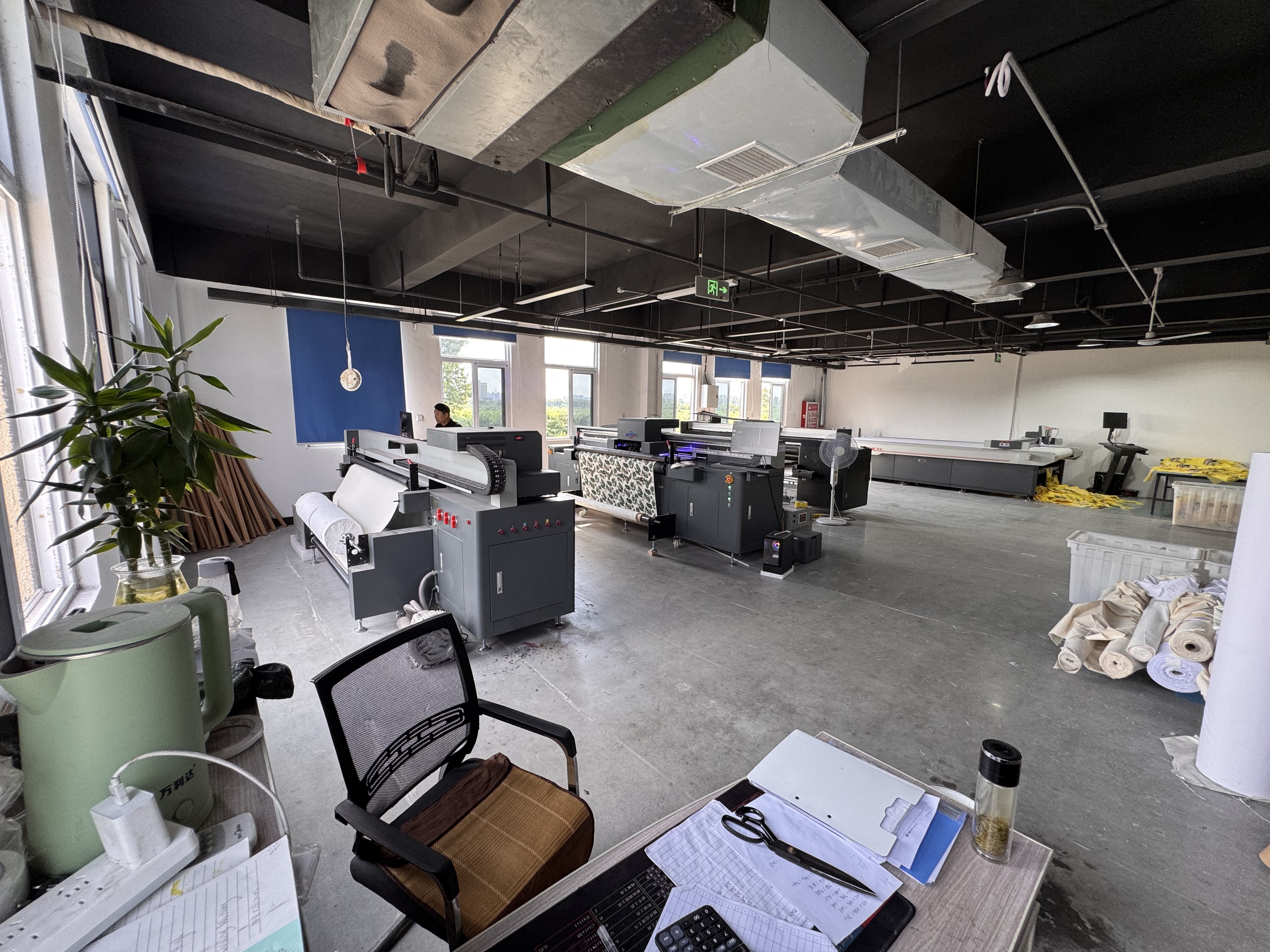
Digital printing in the Yulite workshop: the method is named on the specification sheet together with the approved artwork reference.
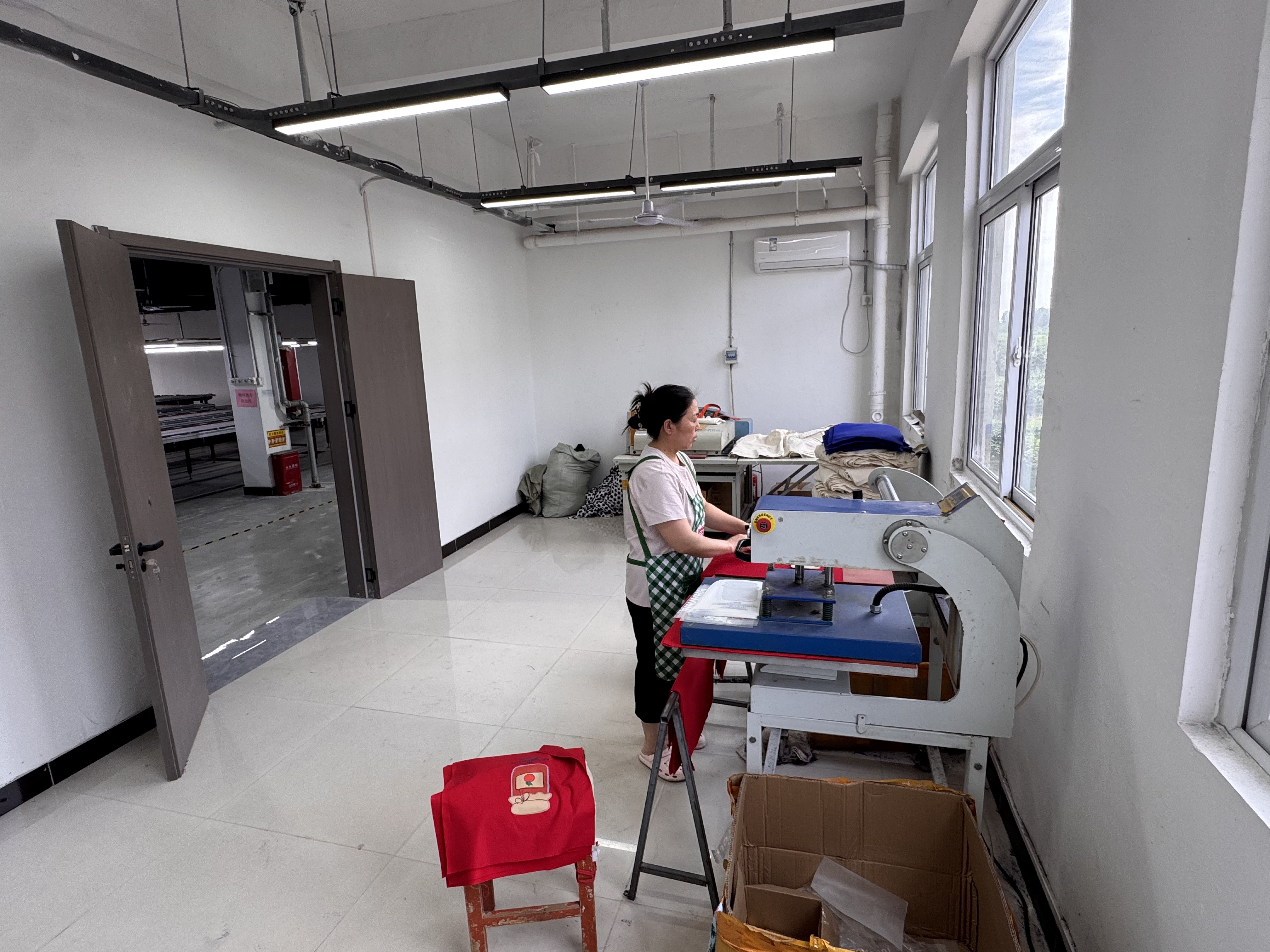
Heat transfer printing: the artwork file becomes a controlled production input, so the approved colour reference belongs on the sheet.
Use Cases: Matching Parameters to Programme Type
Retail and exhibition giveaway
High volume, short life per unit, strong visual requirement. Model 4636 at the lower end of the 100–450 gsm range keeps handling and freight weight down while still delivering a canvas hand feel, and digital or screen printing keeps the brand mark legible in a crowded hall.
Sports and gym programme
Model 4530, a waterproof gym bag in small, medium and large, is specified by size grade first and logo method second. Because the bag is used in wet conditions and carries kit, the size grade and the logo placement rule per size belong on the sheet together; a single placement instruction across three sizes is the most common cause of a rejected pre-production sample.
Picnic, food and outdoor campaign
Model 23250 COOLR BAG is specified by its insulation build: 2 mm foam and aluminium. Programmes in this category should state both parameters and treat the insulation as the primary acceptance criterion, with logo method secondary.
Beauty, hotel and gifting
Model 1812 is a cosmetic bag produced in drawstring and zipper variants. Both variants can carry screen printing, heat transfer printing, digital printing or embroidery, but the variant is a separate SKU and must be stated per line. A drawstring pouch and a zipper pouch are not interchangeable in a gift-with-purchase mechanic, so the variant field is a commercial field, not a technical footnote.
Corporate brand-led gifting
Where the bag is intended to be kept, the fabric family decision leans toward heavier cotton canvas, organic or recycled cotton, or RPET felt, and the logo method leans toward embroidery or a method that reads as permanent. This is the segment where specification discipline has the clearest return, since the bag is judged on hand feel over months rather than in the first minute.
Comparison Tables
Table 1 — Verified model parameters
| Model | Bag type | Verified parameter | Variants / size grade |
|---|---|---|---|
| 4636 | Cotton canvas promotional bag | Cotton canvas fabric weight 100 gsm – 450 gsm | Weight specified per order within the verified range |
| 23250 | COOLR BAG insulated cooler bag | 2 mm foam plus aluminium insulation | Insulation build stated as two parameters |
| 4530 | Waterproof gym bag | Waterproof construction | Small, medium, large |
| 1812 | Cosmetic bag | Logo methods: screen printing, heat transfer printing, digital printing, embroidery | Drawstring style and zipper style |
| 3800 | Promotional bag | Logo methods: screen printing, heat transfer printing, digital printing, embroidery | Logo method selected per model |
Table 2 — Material cost and reuse comparison
| Comparison | Reuse performance | Relative initial cost | Storage and handling note |
|---|---|---|---|
| Cotton bag vs paper bag | Cotton over 50 uses; paper typically 1–2 uses | Cotton approximately 3× paper | Cotton can be stored up to 10 years without damage; paper becomes fragile in storage |
| Cotton bag vs non-woven bag | Cotton up to 50 reuses; non-woven fewer than 10 | Cotton approximately 2× non-woven | Cotton can be washed repeatedly; non-woven cannot be washed and degrades with age |
| Cotton bag vs plastic bag | Cotton reusable; plastic single-use | Cotton approximately 10× plastic | Cotton load capacity 10 kg against 3 kg for plastic; cotton degrades in 6 months–1 year against 200–1000 years for plastic |
Reading the tables together: the second table explains why the first table is worth filling in properly. A higher initial cost per unit is only defensible when the reuse and storage parameters are specified, because those are the parameters that determine cost per use rather than cost per bag.
Risk control note. Specification discipline protects the buyer only if the factory can hold the schedule. Yulite reserves production time for each order, runs its own power generation equipment to avoid power shortage during production, and uses sub-factory capacity to complete orders in parallel. Fabric risk is handled upstream: each lot of fabric is laboratory tested before mass production, which is the control behind the REACH line on the specification sheet.
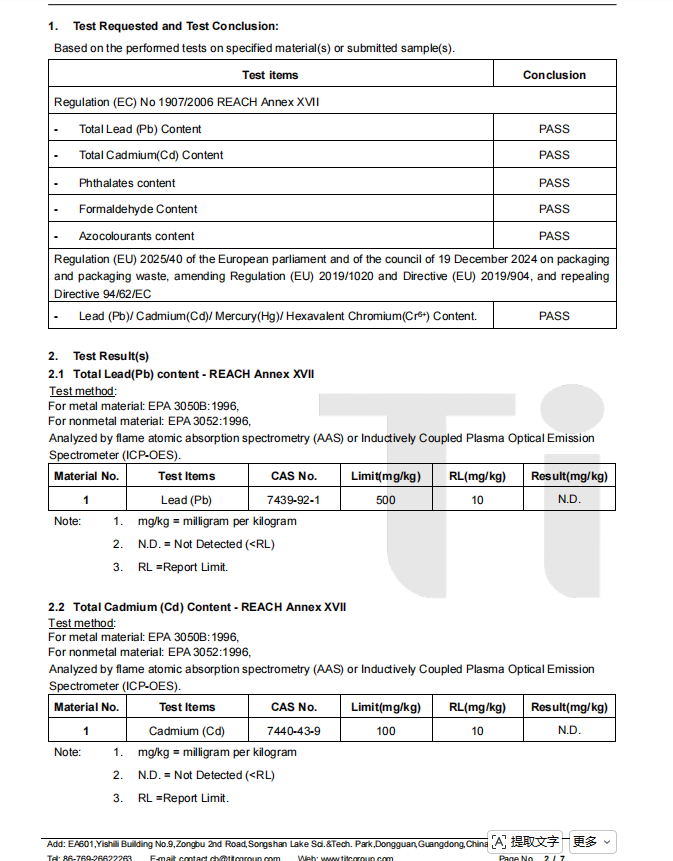
REACH test documentation held for fabric lots: the compliance line on the specification sheet corresponds to a per-lot test before mass production.
Frequently Asked Questions
What must the specification sheet state for a promotional bag sold in the EU?
Two regulatory lines and one document requirement. Bags sold in the EU must comply with REACH Regulation Annex XVII, which restricts azocolourants to 30 mg/kg in textiles. Textile products containing at least 80% textile fibres must also comply with Regulation (EU) No 1007/2011 for labelling, which means the fibre composition printed on the label must match the fabric actually purchased. The document requirement is a test report per fabric lot. Yulite tests each lot of fabric in the laboratory before mass production, and holds GRS, OEKO-TEX Standard 100, ISO9001, BSCI and SEDEX credentials, so the buyer can name the specific document rather than accept a general compliance statement.
Can one supplier cover cotton canvas, insulated and waterproof bags with four logo methods?
For the models in this guide, yes. Yulite’s production range covers cotton canvas at 100–450 gsm on model 4636, insulated construction on model 23250 COOLR BAG with 2 mm foam and aluminium, the waterproof gym bag model 4530 in small, medium and large, and the cosmetic bag model 1812 in drawstring and zipper variants. Four logo methods are available across the range: heat transfer printing, screen printing, digital printing and embroidery. The workshop runs high-post sewing machines, computer sewing machines, pattern sewing machines, overlock machines and cutting equipment, with a stable daily output of 30,000 to 50,000 pieces. The practical constraint is not capability but specification: the more models in one programme, the more important it is that each model carries its own logo method and artwork reference.
How should a buyer weigh the higher cost of cotton against paper, non-woven or plastic?
Use the verified multiples rather than a general impression. Cotton bags carry an initial cost of approximately 3 times that of paper bags, 2 times that of non-woven bags and 10 times that of plastic bags. Against that, cotton bags support over 50 uses versus 1–2 for paper, fewer than 10 for non-woven and single use for plastic; cotton can be stored up to 10 years without damage while paper becomes fragile; cotton carries a 10 kg load against 3 kg for plastic; and cotton degrades in 6 months to 1 year against 200–1000 years for plastic. The cost comparison only becomes meaningful once reuse and storage are specified, because those parameters convert cost per bag into cost per use.
China promotional bag manufacturers versus local suppliers for bulk orders: how should the decision be framed?
Frame it as a parameter question, not a country question. A local supplier competes on proximity and response speed; a manufacturing base in China competes on material range, model breadth and specification depth. The comparison is only decidable when the buyer knows which parameters the programme actually requires. If the brief needs canvas from 100 gsm to 450 gsm, an insulated build defined as 2 mm foam plus aluminium, a waterproof gym bag in three size grades, and a choice among screen printing, heat transfer printing, digital printing and embroidery, then the decisive question is which supplier can hold all of those parameters across a reorder. Yulite, founded in 2008, exports 100% of output to the EU, USA, Japan and Australia and runs an independent sampling room, which is the point at which a distant supplier either closes the specification gap or does not.
What is a realistic sample and production sequence for a specified programme?
Sequence the sheet first, the sample second and the order third. Yulite reports sample turnaround within 3 days through its independent sampling room and professional sample workers, and a stable daily output of 30,000 to 50,000 pieces for mass production. Delivery risk is managed through strict order planning, reserve production time for each order, own power generation equipment and sub-factory support. The first step is the one a buyer controls: request a sample against a written parameter set — model number, GSM, structure, size grade and logo method — so that the approved sample becomes the reference standard for every reorder. To start that process, request a sample or a quotation from the Yulite team, or download the 2026 Yulite product catalogue.
Conclusion
A promotional bag programme is only as repeatable as its specification. Fabric weight belongs on the sheet as a number inside a verified range, not as an adjective; insulation belongs on the sheet as a build, not as a category name; the logo belongs on the sheet as a method plus an artwork reference, not as a promise. Model 4636 gives the cotton canvas range from 100 gsm to 450 gsm, model 23250 COOLR BAG defines insulation as 2 mm foam plus aluminium, model 4530 grades a waterproof gym bag across small, medium and large, and models 1812 and 3800 anchor the choice among screen printing, heat transfer printing, digital printing and embroidery, with model 1812 additionally separated into drawstring and zipper variants.
The order of work matters more than the level of detail: decide the use case, fix the fabric and GSM, write the structure, choose the method per model, state the compliance line, and freeze the sheet at sample approval. Buyers who do this in that order spend their decision time on the parameters that change the bag, and their reorder time confirming a document instead of renegotiating a product.
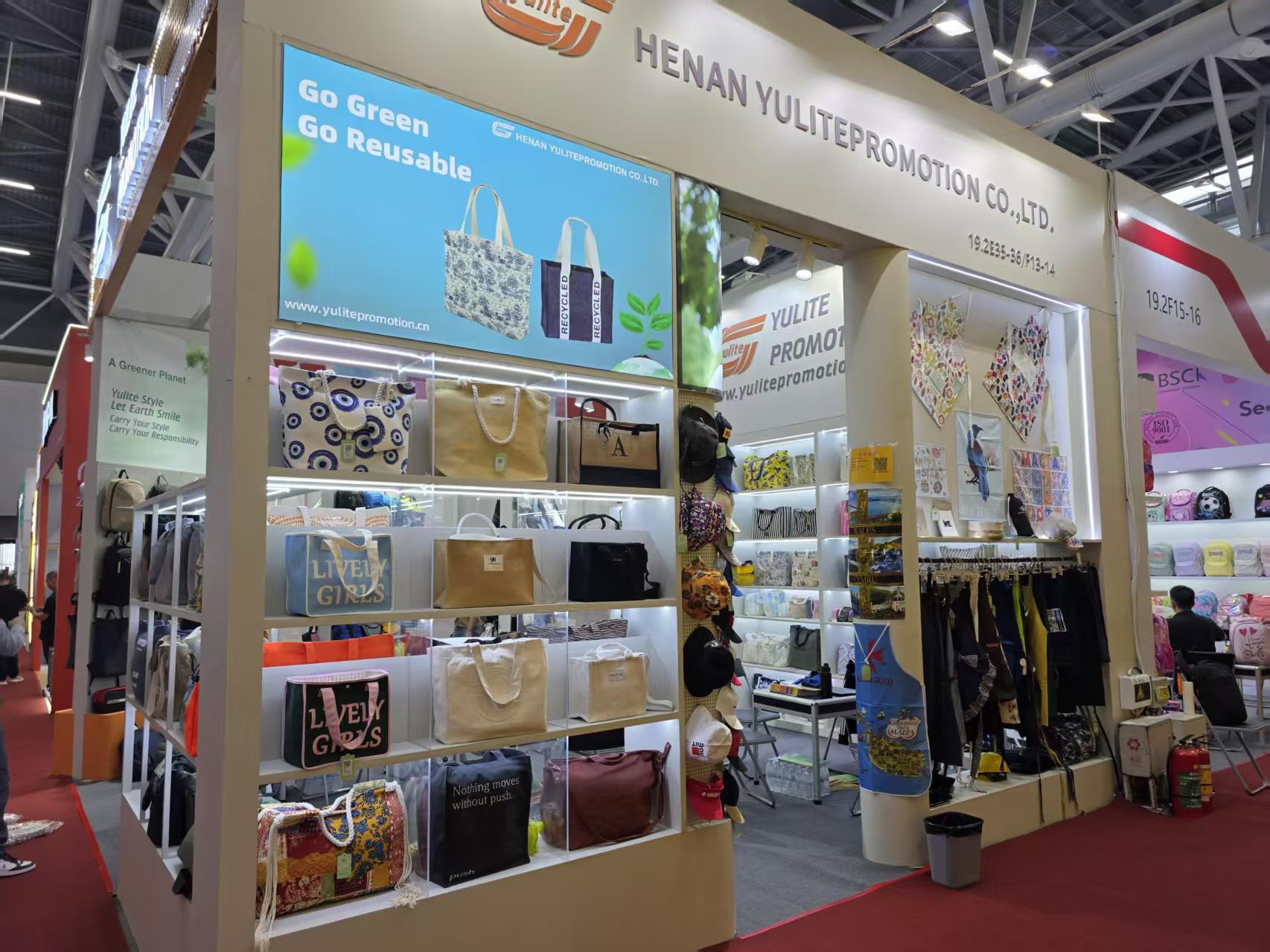
Specification reviews in person: buyers bring a parameter set, the Yulite team maps it to model numbers and sample requirements.
Turn your parameter set into a sample
Send the model number, GSM, structure, size grade and logo method, and the Yulite team will confirm the build against verified production parameters and return a sample and quotation.
Contact: hukaiying@yulitepromotion.cn | Tel: 0086-371-63944082 | WhatsApp: 0086-13703865302 | www.yulitepromotion.cn
Have Questions or Need More Details?
Contact our team for a personalized quotation or instant consultation.
Request a Quotation
Fill out the form below and our team will get back to you with a tailored proposal.
WhatsApp Direct Chat
Prefer to chat in real-time? Message us on WhatsApp for instant assistance & quick answers.
- Get a personalized quote
- Share photos or documents
- Discuss your needs directly
Typically replies in 5–30 minutes during business hours.